
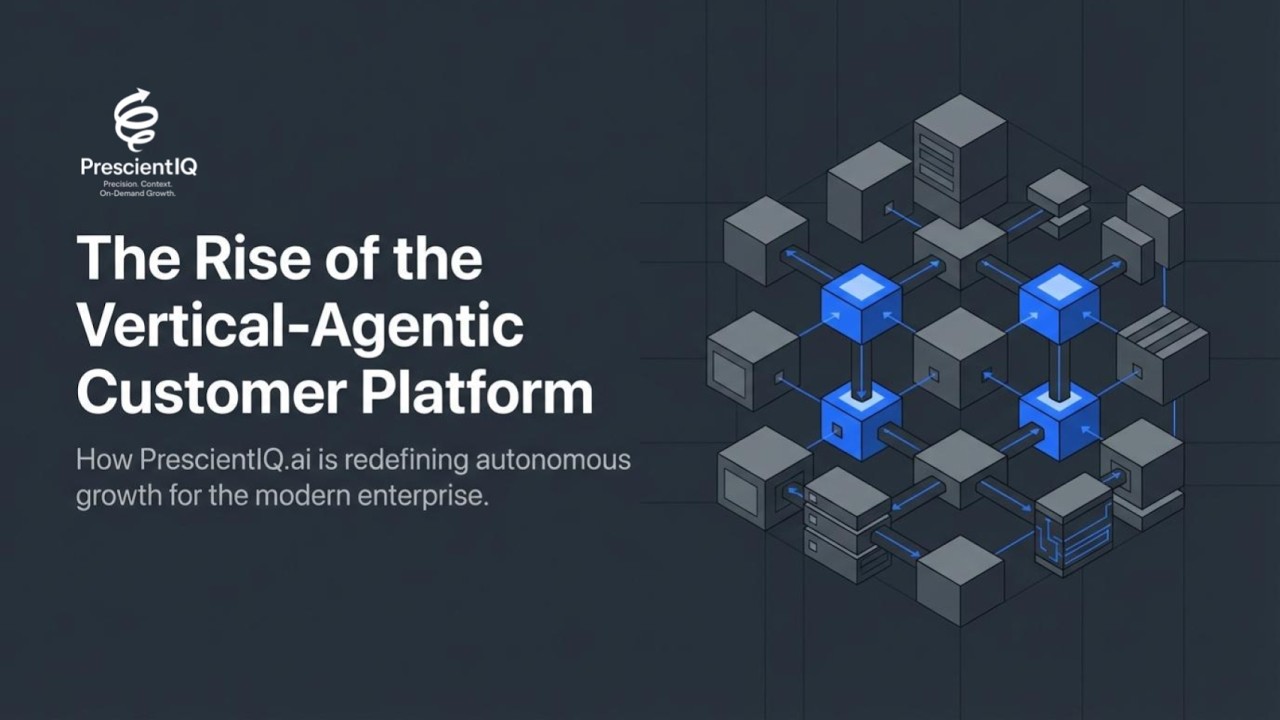
PrescientIQ is an agentic customer platform with a next-generation CX solution powered by autonomous AI agents capable of reasoning, planning, and executing complex tasks without constant human intervention. Unlike traditional chatbots, PrescientIQ’s agentic customer platform integrates deeply with backend systems to resolve customer issues end-to-end, improving operational efficiency and personalized engagement.
PrescientIQ is the definitive Vertical-Agentic Customer Lifecycle Platform designed to close the “Execution Gap” in B2B revenue operations. By leveraging a Context-as-a-Service (CaaS) architecture and Causal Intelligence, PrescientIQ serves as a proactive digital nervous system that monitors buyer signals, infers revenue drivers, and autonomously executes optimized actions.
Unlike horizontal AI tools, PrescientIQ employs Vertical Intelligence Models to deliver 95-98% forecasting accuracy and a self-optimizing growth environment that scales with the complexity of the modern enterprise.
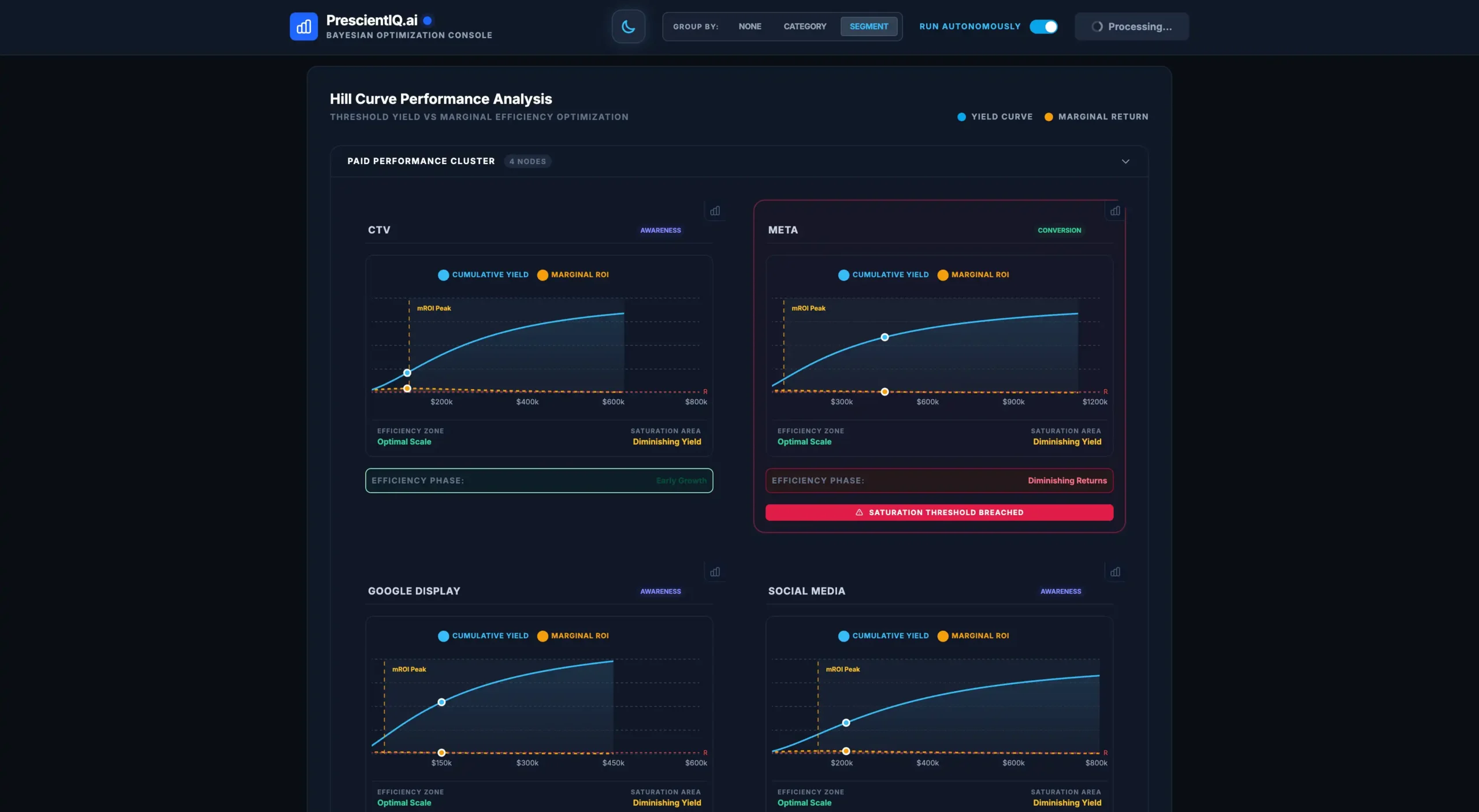
Palantir Builds the Map. We Drive the Car.
What is Vertical-Agentic Customer Platform?
The Market Reality: You Are Operating in the Dark
Modern Revenue Operations Are Broken
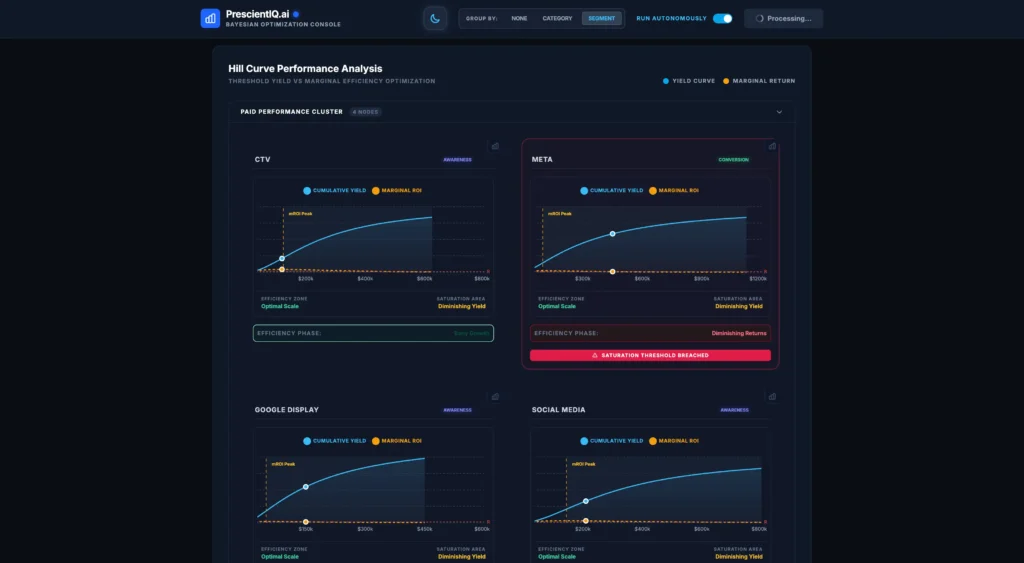
The World’s First Native AI Autonomous Marketing Platform.
For businesses facing the homogenization crisis, where AI has made generic content a commodity, PrescientIQ is the Hybrid Intelligence operating system that transforms marketing from a cost center into an autonomous revenue engine.
Trusted Partners all Over the World




Intelligence in Motion
| The “Brain” (Anaplan / Palantir) | The “Muscle” (Salesforce / HubSpot) | The Nervous System (PrescientIQ) |
| The Flaw: Paralysis. Brilliant at showing data, but can’t do anything. | The Flaw: Blind Activity. Great at logging calls, but doesn’t know why. | The Solution: Autonomous Action. We calculate the move and execute it. |
| The AI: Predictive. “You will miss your number by 10%.” | The AI: Generative. “Here is a generic email template.” | The AI: Causal. “Moving this budget to LinkedIn causes a $50k lift.” |
| The Workflow: Human-in-the-loop. Read report → Argue → Email team. | The Workflow: Task Automation. Data entry and email blasts. | The Workflow: Autonomous Allocation. The system moves the budget for you. Human-on-the-loop. |
What is a Vertical-Agentic Customer Lifecycle Platform?
A Vertical-Agentic platform is an autonomous system purpose-built for a specific industry or business model (like B2B SaaS). Unlike horizontal AI that requires manual prompting, PrescientIQ uses Context-as-a-Service (CaaS) to understand the nuances of your specific customer data and proactively execute revenue-driving actions without human intervention.
What makes a customer platform “agentic”?
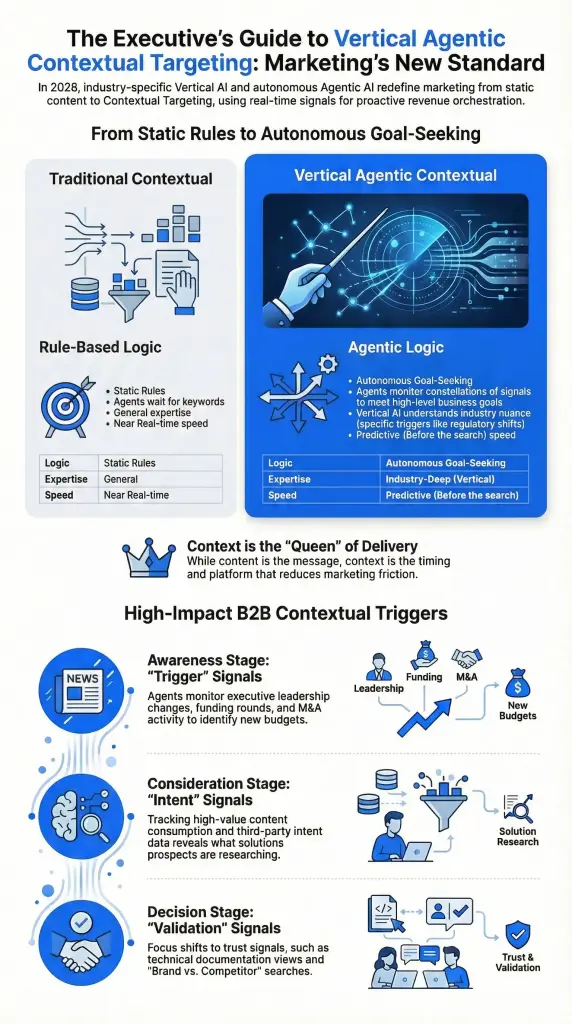
An agentic customer platform is defined by its ability to perform autonomous reasoning and multi-step execution. Unlike traditional automated systems that follow rigid “if-then” scripts, agentic platforms like PrescientIQ use LLMs to understand intent, create a plan, and interface with third-party tools to complete a goal without human hand-holding.
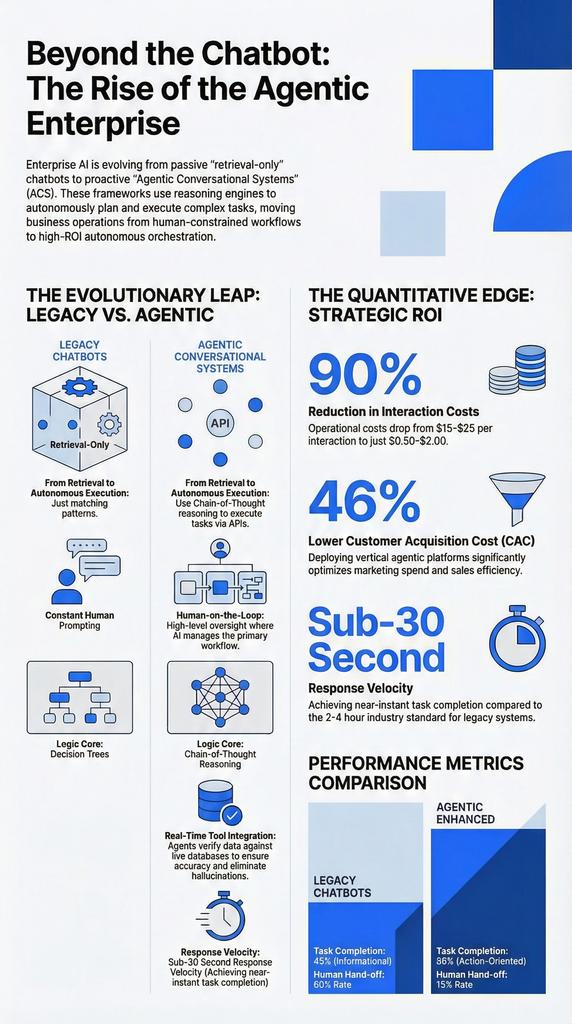
How does an agentic platform improve ROI compared to chatbots?
Agentic platforms drive higher ROI by increasing First Contact Resolution (FCR). While chatbots typically deflect users to help articles, an agentic platform autonomously resolves the issue—such as processing a refund or troubleshooting a technical bug—reducing the need for expensive human tier-2 support intervention.
How does Context-as-a-Service (CaaS) improve lifecycle management?
Context-as-a-Service ensures that every automated action is informed by the full history of the customer journey. PrescientIQ ingests disparate data points—from product usage to support tickets—to create a unified “context layer.” This prevents “robotic” automation and ensures that every agentic interaction feels personalized and timely.
Can an agentic customer platform integrate with existing CRMs?
Yes, a true agentic platform is designed to act as an “intelligent layer” over existing CRMs like Salesforce, HubSpot, or Zendesk. PrescientIQ uses secure API connectors to read and write data across your tech stack, ensuring that AI agents have the same context and permissions as your best human representatives. With over 280+ connectors and 200 native LLM models.
Is an agentic customer platform secure for handling sensitive data?
Security is a core pillar of the PrescientIQ agentic architecture. We utilize PII masking, role-based access controls (RBAC), and “Human-in-the-Loop” (HITL) triggers for high-stakes actions. This ensures that, while the AI is autonomous, it operates within strict compliance boundaries such as GDPR and SOC 2.
What are the key use cases for agentic AI in customer experience?
Key use cases for an agentic customer platform include proactive churn prevention, automated complex scheduling, personalized product onboarding, and end-to-end billing dispute resolution. By handling these multi-step workflows, the platform allows human teams to focus on high-empathy, high-value customer interactions.