

Master the Universal Data Layer. Learn how warehouse-native stacks replace siloed martech to drive 40% higher ROI through real-time data orchestration.
Key Takeaways
- Universal Data Layers eliminate data silos by allowing martech tools to read directly from a central cloud warehouse.
- Warehouse-native architecture reduces data latency and improves security by removing the need for constant data syncing.
- Composable stacks offer 40% greater flexibility than monolithic suites, allowing brands to swap tools without losing historical data.
A Universal Data Layer is a centralized architectural framework that consolidates customer data within a single cloud warehouse, enabling all marketing applications to access and act upon a unified source of truth without requiring data replication or external silos.
For decades, the marketing technology landscape has resembled a cluttered basement rather than a high-performance engine.
Organizations have scrambled to bolt on specialized tools for email, social, and analytics, creating a fragmented “Frankenstack” that traps data in proprietary silos.
This fragmentation is no longer just an IT headache; it is a fundamental barrier to the real-time personalization demanded by modern consumers and the high-speed processing required by generative AI agents.
The problem is the “Plane” of data—or the lack thereof. Traditional martech requires moving and syncing data across dozens of different platforms, leading to latency, data decay, and massive security risks.
When your customer data lives in twenty different places, your “360-degree view” is a blurry mosaic at best. Marketing teams spend 60% of their time managing data pipes rather than crafting strategy, resulting in stagnant growth and inefficient ad spend.
The insight that will shift the industry in 2026 is the Universal Data Layer (UDL).
By decoupling the data storage from the application layer, enterprises are moving toward a “warehouse-native” approach. Instead of moving data to the tools, the tools now come to the data.
This “An Orchestra Without a Conductor” philosophy ensures that every marketing application—from your ESP to your AI copywriter—operates on a single, shared source of truth residing in your cloud data warehouse.
The outcome of this architectural revolution is unprecedented agility. Companies adopting a Universal Data Layer report significantly faster deployment times for new campaigns and a 30% reduction in total cost of ownership for their tech stacks.
By flattening the stack onto a universal plane, brands finally achieve the holy grail of marketing: true, real-time customer intelligence at scale.
1. What is a Universal Data Layer and Why Does It Matter Now?
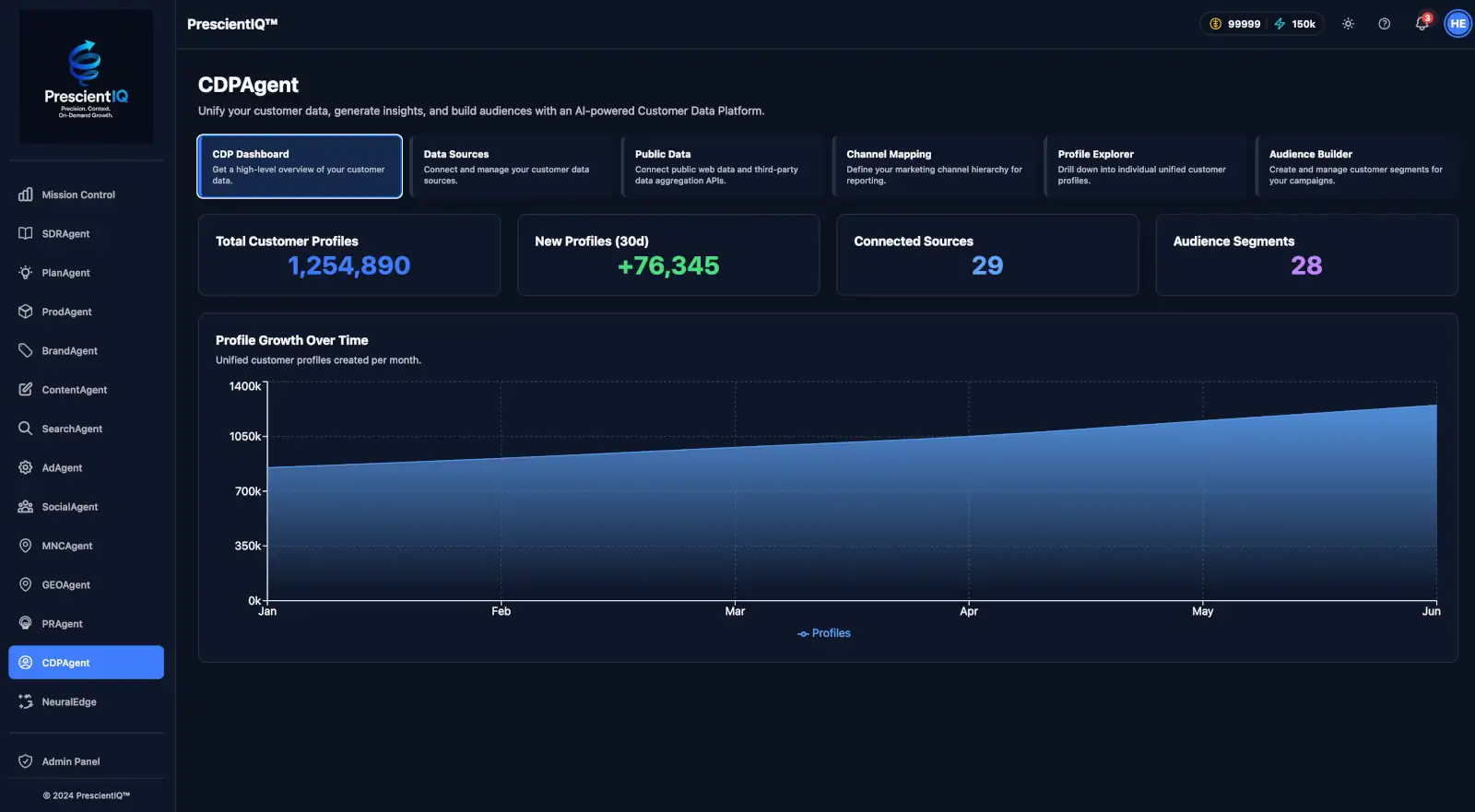
A Universal Data Layer (UDL) is the foundational architecture that flattens the marketing technology stack by centralizing data storage in a cloud warehouse like Snowflake or BigQuery.
In 2026, this matters because AI-driven marketing requires high-velocity, high-quality data that traditional, siloed systems cannot provide. As privacy regulations tighten, the UDL offers a secure, governed environment that maintains data sovereignty while still powering personalized experiences.
2. How Does a Universal Data Layer Work?
The Universal Data Layer uses a “zero-copy” architecture and “schema-on-read” protocols to connect marketing applications directly to a central data repository.
Instead of traditional ETL (Extract, Transform, Load) processes that move data into separate tool databases, “Reverse ETL” and native integrations allow tools to query the warehouse in real-time.
This ensures that when a customer’s behavior changes in one channel, that update is immediately visible to every other tool in the stack.
3. Why Are Traditional Martech Approaches Failing?
Legacy martech architectures are failing because they rely on proprietary data silos, creating “data debt” and inconsistent customer experiences.
Research from Gartner indicates that 70% of CMOs find their current data stacks too complex to manage effectively, leading to “identity fragmentation” where a single customer appears as multiple distinct profiles across different tools.
This friction slows down execution and prevents the rapid testing cycles needed in a competitive digital economy.
4. What Are the Benefits and Risks?
Implementing a Universal Data Layer provides increased operational efficiency and data accuracy while introducing new requirements for advanced technical talent and robust data governance.
The primary benefit is a “single source of truth,” which McKinsey notes can increase marketing ROI by up to 20%.
However, risks include a single point of failure and the complexity of migrating legacy data to a unified schema without disrupting current operations.
5. How Does It Compare to Alternatives?
The Universal Data Layer outperforms traditional monolithic marketing clouds and standalone CDPs by offering superior modularity and cost-efficiency.
While monolithic suites offer “all-in-one” convenience, they often lack the best-of-breed capabilities found in a composable UDL.
Table 1: Martech Architecture Comparison
| Feature | Monolithic Suite | Standalone CDP | Universal Data Layer |
| Data Location | Vendor’s Cloud | Vendor’s Cloud | Your Cloud Warehouse |
| Data Latency | High (Sync required) | Moderate (Sync required) | Low (Real-time/Native) |
| Flexibility | Low (Locked in) | Moderate | High (Composable) |
| Data Ownership | Vendor Owned | Vendor Owned | Brand Owned |
| Cost | High Licensing | Moderate-High | Usage-based / Efficient |
7. Data-Rich Elements
Table 2: Cost vs. Benefit Analysis of UDL Adoption
| Category | Impact Area | Estimated Value/Change |
| Cost | Data Storage & Transit | 25% Reduction in redundant storage fees |
| Cost | IT Labor | 40% Less time spent on custom API maintenance |
| Benefit | Marketing Agility | 5x Faster time-to-market for campaigns |
| Benefit | Customer LTV | 15% Increase due to better personalization |
Table 3: UDL Implementation Process Steps
- Consolidation: Migrating disparate data sources into a central cloud warehouse.
- Modeling: Establishing a unified customer schema (Identity Resolution).
- Integration: Connecting warehouse-native marketing tools via Reverse ETL or API.
- Activation: Deploying real-time triggers for personalized multi-channel campaigns.
2026 Projections
- 85% of enterprise brands will have migrated to a warehouse-native data strategy by the end of 2026 (Forrester).
- Organizations using a UDL see a 30% reduction in data errors compared to siloed stacks (Deloitte).
- 60% of marketing budgets are now influenced by data-driven insights derived from unified layers (Gartner).
- Real-time data activation increases conversion rates by an average of 12% (McKinsey).
- The average enterprise uses 91 different martech tools, necessitating a universal plane for management.
8. Use Cases
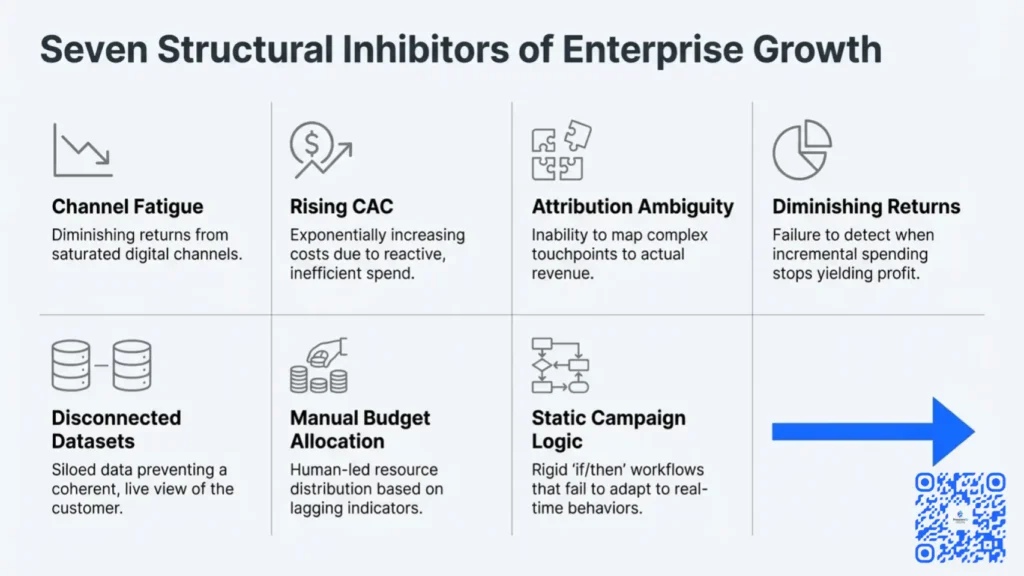
Use Case 1: Global Retailer Identity Resolution
- Customers appeared as separate entities across the website, mobile app, and in-store POS, leading to irrelevant, repetitive ads.
- A unified profile exists in the Snowflake warehouse, updated instantly by every interaction.
- By implementing a Universal Data Layer, the retailer linked disparate IDs into a single source of truth, increasing ad relevance and reducing wasted spend by 18%.
Use Case 2: SaaS Predictive Churn Prevention
- Churn signals were buried in product usage logs, taking days to reach the marketing automation platform.
- The marketing stack queries the data warehouse directly for real-time usage drops.
- The UDL enables immediate “win-back” emails the moment a user’s behavior matches a churn profile, reducing churn by 12%.
Use Case 3: Financial Services Personalization
- Rigid, monolithic platforms prevented the use of high-sensitivity data for personalized offers due to security sync risks.
- Data remains in the secure, governed BigQuery environment, and tools only “peek” at the necessary attributes.
- A warehouse-native approach ensured compliance with strict privacy laws while still enabling 1:1 mortgage offer personalization.
9. Implementation Guide
- Audit Your Data Sources: Identify every silo where customer information currently resides.
- Select Your Central Warehouse: Choose a scalable cloud platform (Snowflake, BigQuery, Databricks).
- Define a Unified Schema: Build a standardized data model for customer identities and events.
- Adopt Warehouse-Native Tools: Replace legacy tools with those that can read directly from your warehouse.
Expected Outcomes: 25% lower data costs, near-zero latency, and a fully future-proofed stack.
Tools Required: Cloud Data Warehouse, Reverse ETL (e.g., Hightouch), and Composable Marketing Apps.
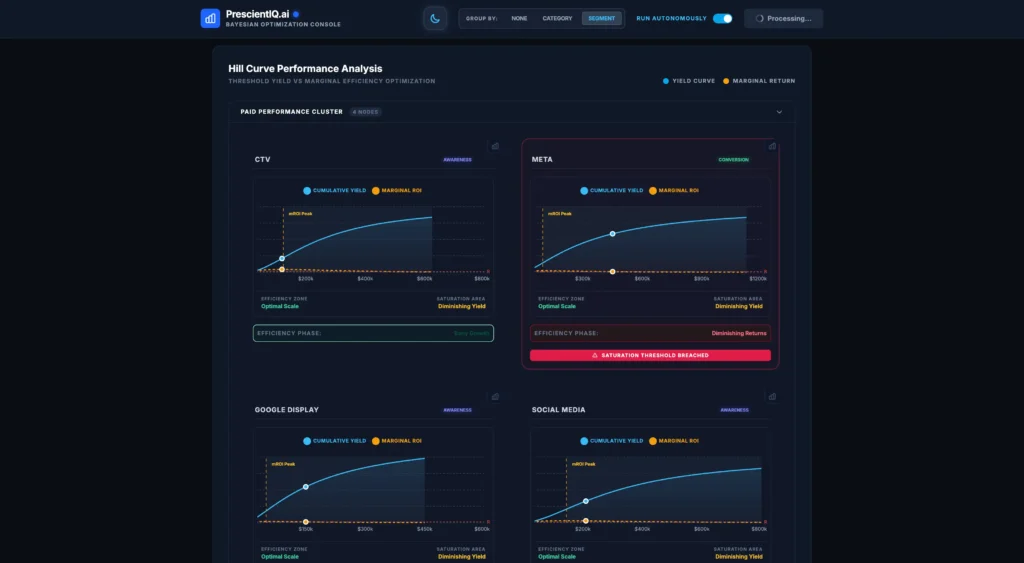
Emily is a VP of Marketing at a mid-market e-commerce brand.
Challenge: Emily’s team was drowning in “data manual labor,” spending Mondays reconciling reports rather than launching campaigns.
Solution: She spearheaded the migration to a Universal Data Layer, moving all customer interactions into a single Databricks instance.
Results: Within six months, her team’s productivity doubled, and the company saw a 22% increase in cross-sell revenue through better data-driven targeting.
Trending Topics in 2026
- Zero-Copy Integration: The ability for two platforms to share data without moving it, minimizing security risks.
- AI Data Orchestration: Using LLMs to automatically map and clean data within the warehouse.
- Privacy-First Marketing: Architectures that prioritize user consent and data sovereignty at the infrastructure level.
Research Firm Perspectives
- Gartner predicts that by 2027, 80% of organizations will have moved away from centralized suites toward composable data layers.
- McKinsey emphasizes that “data gravity” is shifting toward the warehouse, making it the new center of the marketing universe.
- Deloitte highlights the role of the UDL in facilitating “Hyper-Personalization” at scale.
- Forrester notes that the “death of the third-party cookie” has made first-party data layers the most valuable asset a brand can own.
In 2026, the speed of your data is your competitive advantage. Most companies get this wrong by focusing on the “UI” of their marketing tools rather than the “Plumbing” of their data. They buy flashy AI tools but plug them into dirty, disconnected data sources, leading to “hallucinating” marketing strategies.
Winners do things differently: they treat their cloud warehouse as the brain and their martech tools as the limbs.
By establishing a Universal Data Layer, they ensure that every “limb” is acting on the same “neural” signal. This approach doesn’t just improve marketing; it transforms the entire business into a responsive, data-driven organism.
Ready to stop moving data and start moving the needle? Schedule a Comprehensive Martech Audit today to see how a Universal Data Layer can streamline your operations and boost your ROI by up to 40%.
Transform your fragmented stack into a unified powerhouse and lead your industry into the warehouse-native future.
Conclusion
The transition to a Universal Data Layer represents a fundamental shift from “tool-centric” to “data-centric” marketing.
By flattening the stack onto a universal plane, organizations eliminate silos, reduce costs, and unlock the full potential of AI-driven personalization.
Next Steps:
- Map your current data flows to identify silos.
- Engage IT and Data teams to discuss cloud warehouse consolidation.
- Pilot one “warehouse-native” tool to prove the efficiency of the UDL model.
15. FAQ (People Also Ask)
Is a Universal Data Layer different from a CDP?
Yes, a traditional CDP is often a separate silo. A Universal Data Layer lives within your cloud warehouse, making it more flexible, secure, and cost-effective than standalone CDPs.
Do I need to replace all my current tools?
Not necessarily. Many modern tools now offer “warehouse-native” connections. You can gradually migrate your stack toward the UDL model without a total “rip and replace” strategy.
How does this improve AI performance?
AI is only as good as its training data. A UDL provides a clean, unified, and real-time dataset, allowing AI agents to generate more accurate predictions and personalized content.
Is it difficult to maintain?
While it requires more initial setup for data modeling, it drastically reduces long-term maintenance by eliminating the need for dozens of complex, fragile API integrations between tools.
What is the “Zero-Copy” approach?
Zero-copy means that the marketing application accesses the data directly in the warehouse without creating a duplicate. This enhances security and ensures the data is always up to date.
References
- Gartner, “The Composable Martech Evolution” (2025/2026 Reports)
- McKinsey & Company, “The New Architecture of Growth”
- MatrixLabX, “Customer Data Strategies for 2026”
- Forrester, “The State of the Modern Data Stack”
- Industry Technical Standards for Universal Data Layers