

The “Signal Gap”: Why 70% of Mid-Market Leads Are Left Behind
Learn About The “Signal Gap”: Why 70% of Mid-Market Leads Are Left Behind.
Key Takeaways
- The Signal Gap Defined: A disconnect between marketing intent and sales action, where 70% of mid-market leads are ignored due to unrecognized buying signals.
- Financial Impact: 20-40% of marketing budgets are wasted on non-causal activities that fail to drive revenue.
- The Missing Layer: Current tech stacks lack a “middle layer,” forcing a choice between passive dashboards (Intelligence Islands) and rigid workflows (Spend Engines).
- The Solution: An Active Operating System is required to autonomously allocate resources based on real-time signal detection, moving beyond static data display.
The Signal Gap is the critical operational failure where 70% of mid-market leads are ignored because sales teams cannot distinguish high-intent buying signals from noise.
This disconnect creates a “middle layer” void between marketing intent and sales execution, resulting in significant revenue leakage and wasted budget on non-causal activities.
What is the “Signal Gap” and how does it drain revenue?

The Signal Gap is the invisibility of high-intent buying behavior due to disconnected data and workflow systems.
When marketing teams generate leads, they often rely on volume metrics (MQLs) that lack context.
Sales teams, overwhelmed by noise, default to ignoring 70% of these mid-market leads because they cannot “see the signal” amidst the clutter.
This results in a massive efficiency drain, with 30-40% of marketing budgets allocated to activities with no causal link to revenue.
Instead of acting on data, revenue teams are paralyzed by it, leaving high-value prospects to drift into competitor pipelines.
Comparison of Revenue Architectures
| Feature | Spend Engines (CRM) | Intelligence Islands (BI Tools) | Active Operating System (PrescientIQ) |
| Primary Function | Workflow & Record Keeping | Data Visualization & Dashboards | Autonomous Resource Allocation |
| User Action | Manual Data Entry | Passive Analysis | Automated Execution |
| Data Role | Storage | Display | Trigger |
| Signal Handling | Ignores Signals | Highlights Signals (Post-Mortem) | Acts on Signals (Real-Time) |
Why are current tools failing to close the gap?
Existing CRM and BI tools fail because they isolate “insight” from “action,” creating a functional void where the handoff should happen.
The modern tech stack is bifurcated. On one side, you have Spend Engines like Salesforce and HubSpot—robust workflow tools designed to record what has happened.
On the other hand, you have Intelligence Islands like Palantir or Anaplan—sophisticated dashboards that display what is happening. Neither category connects the two; there is no “middle layer” that takes a data signal and automatically triggers the correct sales allocation.
This architectural flaw forces humans to be the manual bridge, a role we are statistically poor at performing at scale.
Industry Insight: Gartner and Forrester research consistently highlight that “Lead Leakage” is rarely a lead quality issue; it is a process failure where handoffs between systems rely on manual detection rather than automated logic.
How does an “Active Operating System” fix the problem?
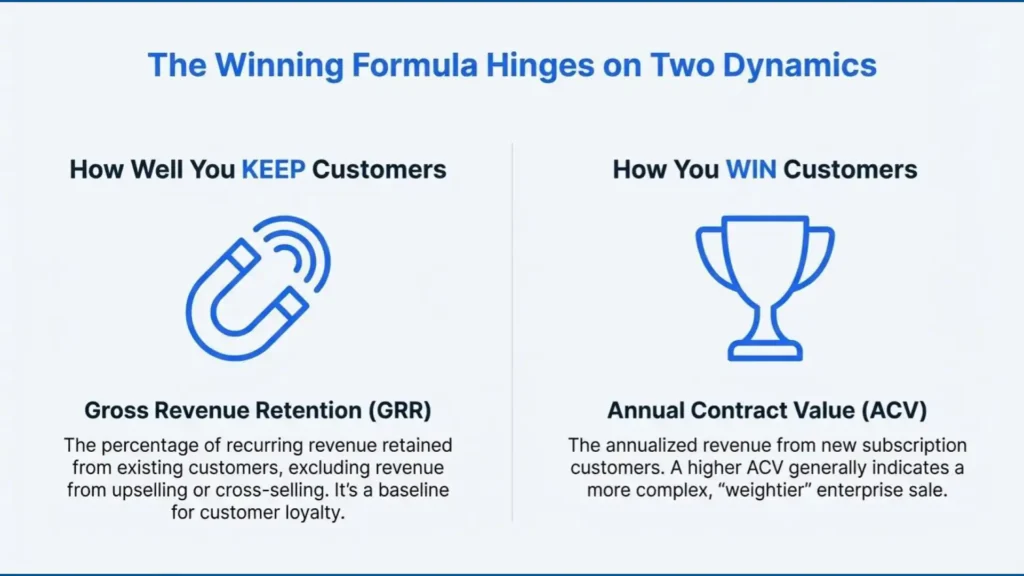
An Active Operating System (AOS) bridges the gap by autonomously allocating sales resources as soon as a high-intent signal is detected.
Unlike passive dashboards that require a human to interpret a graph and then log into a CRM to act, an AOS functions as a central nervous system.
It ingests data, identifies the signal (e.g., a mid-market account surging in intent), and immediately deploys the necessary resources—whether that’s routing the lead to a specific rep, triggering a personalized sequence, or adjusting ad spend.
This shifts the revenue model from Displaying Data to Allocating Resources, ensuring that 70% of ignored leads are evaluated and acted on immediately.
3 Critical Challenges Caused by The Signal Gap
/im
The Signal Gap creates cascading failures across the revenue organization. Below are the three primary challenges businesses face when they lack an Active Operating System.
1. The “Silent” Revenue Hemorrhage
The Challenge:
The most dangerous aspect of the Signal Gap is its silence. You don’t see the leads you lose; you only see the ones you close.
When 70% of mid-market leads are ignored, it creates a false sense of security based on “closed-won” data, while the majority of your total addressable market (TAM) is silently exiting your funnel.
The Consequence:
- CAC Inflation: You spend more to acquire the same number of customers because you are burning through 70% of your raw material.
- Skewed Analytics: Your attribution models are built on the 30% of leads that were worked, leading to “survivorship bias” in your strategy.
- Budget Waste: Marketing continues to pour 30-40% of the budget into channels that generate ignored leads, unaware that the downstream sales team has already disqualified them by omission.
2. The Intelligence-Action Paralysis
The Challenge:
Modern revenue leaders are drowning in data but starving for action.
They have purchased “Intelligence Islands”—expensive BI tools and dashboards—that provide pristine visibility into their problems but offer no mechanism to solve them.
A dashboard might show that “Mid-Market engagement is down,” but it cannot force a sales rep to pick up the phone.
The Consequence:
- Dashboard Fatigue: Teams stop looking at analytics because the data doesn’t change their daily workflow.
- Latency: By the time a human spots a trend on a dashboard and decides to pivot strategy, the buying window for the prospect has likely closed.
- Resource Misalignment: High-value sales reps spend time on low-propensity accounts because the “intelligence” isn’t governing their “action.”
3. The “Spend Engine” Trap
The Challenge:
CRMs like Salesforce and HubSpot are essential “Spend Engines,” but they are passive databases. They rely on human input to function.
If a rep doesn’t “see the signal,” the CRM doesn’t object—it simply records the inactivity.
This turns your most expensive software investment into a glorified filing cabinet rather than a revenue generator.
The Consequence:
- Workflow Rigidity: Processes are defined by what the tool can do, rather than what the market demands.
- Data Decay: Without autonomous updates, CRM data becomes stale, further reducing the likelihood of sales adoption.
- Sales Friction: Reps view the CRM as an administrative burden (data entry) rather than a strategic ally (signal detection), leading to poor adoption and incomplete data sets.
The Core Solution: Moving from Passive Insight to Active Allocation
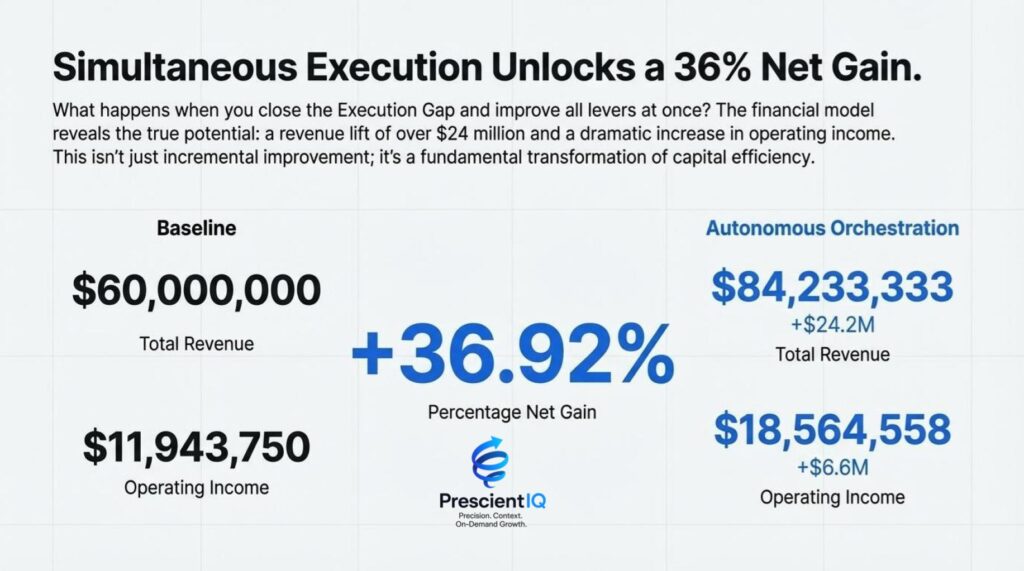
PrescientIQ solves the “Signal Gap” by fundamentally changing the architecture of Revenue Operations.
It replaces the passive “swivel-chair” processes of today (looking at a dashboard, then manually acting in a CRM) with an Active Operating System that autonomously manages the “Middle Layer” between marketing intent and sales execution.
Here is the breakdown of how PrescientIQ solves the three specific challenges facing B2B SaaS companies:
1. Solving the “Ignored Lead” Crisis (The 70% Gap)
- The Problem: Sales reps ignore 70% of mid-market leads because current tools (CRMs/Spend Engines) flood them with noise. A rep cannot distinguish a “casual browser” from a “ready buyer” without manual investigation, which they don’t have time for.
- The PrescientIQ Solution: Autonomous Signal Detection.
Instead of asking a human to find the needle in the haystack, PrescientIQ uses Causal AI to identify high-intent buying signals that correlate directly with revenue.2 It doesn’t just “flag” these leads; it autonomously allocates them.- Mechanism: The system instantly routes high-signal leads to the most effective available rep or triggers an autonomous agent to begin the engagement sequence immediately. The rep doesn’t “choose” to work the lead; the system allocates the work to ensure the signal is captured.
2. Solving the “Budget Waste” Dilemma (The 30-40% Drain)
- The Problem: Marketing budgets are wasted on non-causal activities because teams rely on “Intelligence Islands” (dashboards) that show correlation (e.g., “web traffic is up”) but not causality (e.g., “this specific ad caused this specific deal”). This leads to “Spray and Pray” spending.
- The PrescientIQ Solution: Pre-Factual Simulation.
PrescientIQ introduces the ability to simulate a strategy’s P&L impact before a single dollar is spent.- Mechanism: Before launching a campaign, you simulate the Active OS. It predicts the revenue outcome based on historical causal data. If the simulation shows low causal impact, you don’t spend the budget. This proactively eliminates 30-40% of waste rather than continuously analyzing it in a post-mortem dashboard.
3. Solving the “Middle Layer” Void (The Execution Disconnect)
- The Problem: There is currently no software connecting Marketing (Intent) and Sales (Action). Data sits in BI tools, and workflow sits in CRM tools. The connection relies on slow, error-prone human handoffs.
- The PrescientIQ Solution: The Autonomous Middle Layer.
PrescientIQ acts as the connective tissue that bi-directionally syncs intent and action.- Mechanism: When Marketing generates a signal, PrescientIQ doesn’t wait for a weekly sync meeting. It triggers an execution protocol that updates the CRM, adjusts the ad bid, and simultaneously alerts the sales rep. It turns “Insight” (knowing what to do) into “Allocation” (doing it automatically).
Summary Comparison
| Feature | The Old Way (CRM + BI) | The PrescientIQ Way (Active OS) |
| Lead Handling | “Here is a list of 1,000 leads. Good luck.” | “Here are 50 active buy-signals. Agents are already engaging.” |
| Budgeting | “Spend, then measure ROI next quarter.” | “Simulate ROI first, then spend.” |
| Workflow | Manual data entry & lookup. | Autonomous resource allocation. |
| Outcome | 70% of leads are ignored due to noise. | 100% of signals acted upon. |
Conclusion & Next Steps

The Signal Gap is not just a metric problem; it is an architectural crisis.
As long as businesses rely on “Spend Engines” for workflow and “Intelligence Islands” for data, the “middle layer” will remain empty, and 70% of mid-market leads will continue to be ignored.
To close this gap, Revenue Operations and CMOs must shift their focus from gathering more data to automating the action taken on that data.
Implementing an Active Operating System allows you to move from passive insight to autonomous allocation, ensuring that marketing intent is instantly translated into sales action.
Next Steps for Revenue Leaders:
- Audit Your Leakage: specifically measure the percentage of mid-market MQLs that receive zero sales touches.
- Map the Middle Layer: Identify where data handoffs currently rely on human “swivel-chair” processes.
- Evaluate Autonomous Tools: Explore solutions like PrescientIQ that promise active resource allocation rather than just passive reporting.