
What are Context Graphs? The Missing “Brain” of Autonomous AI
Learn About Context Graphs: The Missing “Brain” of Autonomous AI.
Key Takeaways
- Context Graphs go beyond Knowledge Graphs: While Knowledge Graphs map static relationships (A is related to B), Context Graphs map dynamic states, decision traces, and causal links (A is related to B because of condition C).
- Essential for Agentic AI: They serve as the “shared memory” and “orchestration layer” for autonomous agents, preventing circular logic and silos.
- Solves the “Black Box” Problem: Context Graphs provide a “Glass Box” audit trail, allowing businesses to see why an AI model made a specific decision.
- Key Efficiency Stat: Enterprises using graph-based context layers report up to 3x higher ROI on AI investments by reducing hallucinations and data retrieval time (McKinsey, 2025).
What is a Context Graph?
A Context Graph is a dynamic architectural layer that structures data into interconnected “problem spaces” rather than static tables.
Unlike standard databases, it captures causal relationships, real-time states, and decision logic that link entities (customers, assets, workflows), enabling AI agents to reason with situational awareness rather than just statistical prediction.
How does a Context Graph differ from a Knowledge Graph?

A Context Graph is an actionable evolution of a Knowledge Graph designed for dynamic decision-making.
While a Knowledge Graph is a map of facts, a Context Graph is a map of states and flow.
It doesn’t just say “Product A is compatible with Product B”; it tells the system that “Product A is currently the best recommendation because inventory for Product B is low and the customer is in a high-urgency segment.”
Comparison: Static Knowledge vs. Dynamic Context
| Feature | Knowledge Graph (The Map) | Context Graph (The GPS) |
| Primary Unit | Entities (Nouns) | States (Conditions/Events) |
| Relationship Type | Static / Ontology (Is-A, Has-A) | Causal / Temporal (Triggered-By, Leads-To) |
| AI Function | Retrieval (Finding facts) | Reasoning (Navigating workflows) |
| Update Frequency | Periodic (Batch updates) | Real-Time (Event-driven) |
| Use Case | Semantic Search, Data Integration | Agentic AI, Autonomous Workflows |
Expert Insight: “Knowledge graphs provide the ‘truth,’ but context graphs provide the ‘wisdom’—the ability to apply that truth to a shifting reality in real-time.” — Dr. Alon Halevy, AI Data Researcher.
Why are businesses rushing to adopt Context Graphs now?
Businesses are adopting Context Graphs to address the “last mile” problem in Generative AI: hallucinations and a lack of auditability.
As of late 2025, 78% of enterprises have deployed AI in at least one function (McKinsey), yet 68% of enterprise data remains unanalyzed (IBM) due to silos. Large Language Models (LLMs) often fail in complex enterprise environments because they lack “grounding“—they don’t know the specific rules, history, or constraints of the business.
Context Graphs solve this by feeding the AI a structured “state of the world,” drastically reducing error rates.
The Cost of Missing Context
- $12.9 Million: The average annual cost to organizations due to poor data quality (Gartner).
- 30% Revenue Loss: The estimated impact of data silos on annual revenue (IDC).
- 47% of Time Wasted: Professionals spend nearly half their day just searching for the right context to do their job (Pyron Report).
How do Context Graphs power AI Agents?
Context Graphs act as the “Shared Working Memory” for multi-agent systems, ensuring agents don’t work in silos.
In an “Agentic AI” architecture (Gartner’s #1 Trend for 2025), you might have a Sales Agent and a Support Agent.
Without a Context Graph, the Sales Agent might aggressively pitch a customer who is currently furious about an unresolved support ticket.
With a Context Graph, the Customer State is a shared node.
The Support Agent updates the state to “At-Risk,” and the Context Graph instantly blocks the Sales Agent’s pitch workflow, replacing it with an “Apology & Retention” workflow.
Standard RAG vs. GraphRAG (Context-Aware)
| Metric | Standard RAG (Vector Search) | GraphRAG (Context Graph) |
| Retrieval Method | Similarity Search (Keywords/Vectors) | Structural Traversal (Relationships) |
| Understanding | “These words look similar.” | “This concept causes that outcome.” |
| Multi-Hop Reasoning | Poor: Fails to connect distant facts. | Excellent: Follows chains of logic. |
| Hallucination Rate | Moderate (~15-20%) | Low (<5%) due to grounded constraints. |
The “5 Ws” of Context Graphs
To fully grasp the operational value of Context Graphs, we must break down the fundamental logistics: Who builds them, what they contain, where they live, when they trigger, and why they are non-negotiable for modern AI.
1. Who builds and manages them?
Context Graphs are rarely built by manual data entry.
They are built by Data Engineers and AI Architects using automated “Context Engines” (such as those from PrescientIQ, TigerGraph, or specialized startups like Amigo AI).
These engines ingest data from CRMs, ERPs, and IoT streams and automatically map relationships.
- The Stakeholder: The Chief Data Officer (CDO) is typically the executive sponsor, as this technology bridges the gap between IT infrastructure and business goals.
2. What data is inside a Context Graph?
It contains three distinct layers of information that traditional databases keep separate:
- The Entity Layer: The nouns (Customer, Product, Location).
- The Semantic Layer: The meaning (Product A “is a replacement for” Product B).
- The Episodic Layer: The history (Customer X “attempted to buy” Product A but failed due to “Error Y”).
This combination allows the AI to answer “What happened?” (Episodic) and “What does it imply?” (Semantic).
3. Where does it sit in the stack?
The Context Graph sits between your Raw Data (Snowflake, Databricks) and your AI Models (LLMs).
It is the “middleware” of intelligence.
Instead of the AI querying a SQL database directly (which is rigid) or a Vector Database (which is fuzzy), it queries the Graph to get a precise, structured path of reasoning.
4. When does it update?
Unlike a data warehouse that might update nightly, a Context Graph is Event-Driven.
- Event: A user clicks “Checkout.”
- Graph Action: The graph instantly updates the user’s state node from “Browsing” to “Transactional” and triggers a check on the “Inventory” node.
This real-time state management enables AI agents to act autonomously without waiting for human approval.
5. Why is it the “Brain” of the operation?
Without a Context Graph, an AI model is amnesiac—it approaches every query as if it were born yesterday.
The graph gives the AI Long-Term Memory and Situational Awareness.
It ensures that if an AI agent promised a refund yesterday, it remembers that promise today, even if a different “sub-agent” is handling the conversation.
3 Critical Challenges Context Graphs Create for Businesses
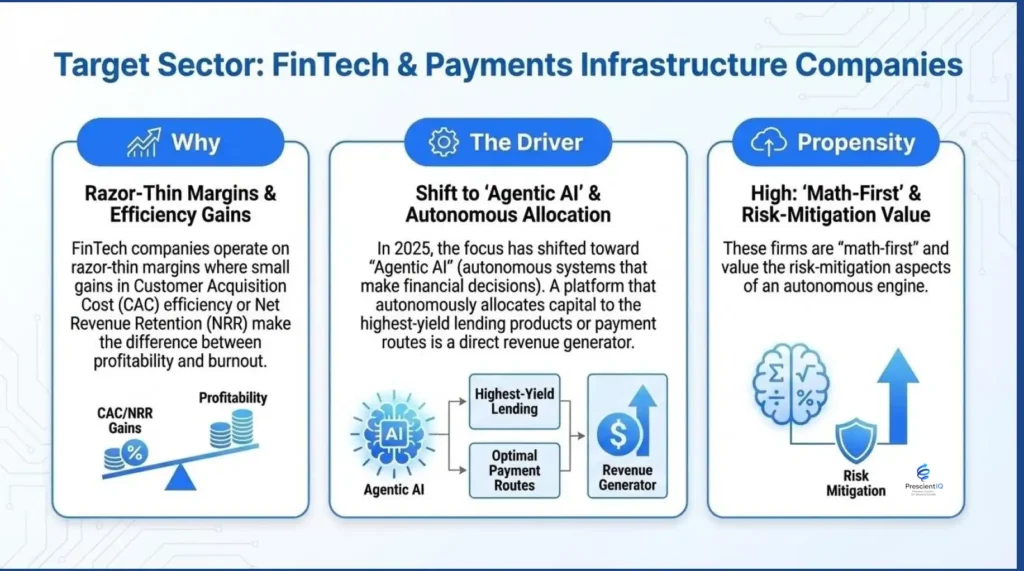
While Context Graphs offer immense power, they introduce significant complexity. Businesses must navigate three primary hurdles to successfully implement them.
1. The “Ontology Bottleneck” and Semantic Rigidity
The Challenge: Building the initial “schema” (ontology) for a graph is notoriously difficult.
You must define how every concept in your business relates to every other concept.
If you define these relationships too rigidly, the system breaks when the business changes (e.g., introducing a new product line that doesn’t fit the old hierarchy).
The Business Impact: Many projects stall in the “whiteboarding phase” for months. If the ontology is too complex, AI agents struggle to traverse it efficiently, resulting in latency.
The Fix: Use “Schema-Free” or “LLM-generated” ontologies, where the AI dynamically defines relationships as it ingests data, rather than relying on humans to hard-code every link.
2. Computational Intensity and Latency
The Challenge: Querying a massive graph with millions of nodes and billions of edges is computationally expensive. Standard databases use “Index lookups” (very fast), but graphs use “Traversals” (hopping from node to node).
If an AI agent needs to hop through 5 layers of connections to find an answer, it can cause a delay.
The Business Impact: For real-time applications (like a customer service voice bot), a 2-second delay while the graph “thinks” is unacceptable. This can lead to poor user experience (UX) and abandonment.
The Fix: Implement Graph Caching and Sub-Graph Extraction, loading only the relevant slice of the graph into memory for the specific agent handling the task.
3. Privacy, Governance, and “Inferred Secrets.”
The Challenge: Graphs are excellent at connecting dots—sometimes too well. A Context Graph might inadvertently reveal sensitive information by inferring relationships that weren’t explicitly stated.
- Example: The graph notes that Employee A and Employee B (who work in rival departments) meet at the same coffee shop every Tuesday at 10 AM. It might infer a “Collab” or “Leak” relationship.
The Business Impact: This creates massive Data Governance and GDPR risks. If an AI agent has access to the full graph, it might answer a user’s question by inferring confidential data from public connections.
The Fix: strict Role-Based Access Control (RBAC) at the node/edge level, ensuring that AI agents only “see” the parts of the graph relevant to their specific clearance level.
What are the top Research Firms saying?
The world’s leading analysts have identified Graph technologies as a cornerstone of the next wave of AI.
- Gartner: Identifies “Agentic AI” as the #1 Tech Trend for 2025. They predict that by 2028, 15% of day-to-day work decisions will be made autonomously by agents, a feat impossible without the structured reasoning of context graphs. They also highlight “AI-Ready Data” as a prerequisite, explicitly moving away from silos. If they think 2028, well, it’s already here.
- Forrester: Emphasizes the shift from “Data Fabric” to “Enterprise Knowledge Graph.” They warn that organizations treating graph tech as just “another database” will fail; it must be treated as the enterprise’s semantic layer.
- Deloitte: In its “State of Generative AI” report, it notes that Trust and Hallucinations are the top barriers to adoption. They advocate for architecture that combines “Human oversight with emerging tools”—a direct reference to the “Glass Box” nature of graph-based AI.
Here is a comparison matrix that analyzes how PrescientIQ, TigerGraph, Alembic, and Amigo AI use graph and AI technologies.
These four platforms represent different layers of the modern AI stack: Infrastructure (TigerGraph), Agentic Platforms (Amigo AI), and Vertical Applications (PrescientIQ, Alembic).
Comparison Matrix: Graph & AI Architectures
| Feature | PrescientIQ | TigerGraph | Alembic | Amigo AI |
| Primary Category | Autonomous Revenue Engine (Application) | Graph Database (Infrastructure) | Causal Marketing Analytics (Analytics Tool) | Agentic AI Platform (Dev Platform) |
| Core Philosophy | “Simulate the future, then let agents execute it.” | “Connect all data to find deep patterns in real-time.” | “Prove the ROI of marketing using physics-based math.” | “Build safe, context-aware agents for critical tasks.” |
| Role of “Graph” | Living Customer Graph: A dynamic simulation environment to test strategy before spending. | Deep Link Graph: A high-speed database to store billions of nodes/edges for querying. | Causal Graph: Maps marketing signals (TV, Radio, Digital) to revenue outcomes (Attribution). | Context Graph: Acts as the “Shared Memory” & safety layer for autonomous agents. |
| AI Approach | Unified Causal Intelligence: Combines Causal AI + Autonomous Agents (LAMs). | Graph ML: Runs algorithms (PageRank, Community Detection) directly inside the database. | Time-Series Causal Modeling: Uses epidemiology/physics models to find signal in noise. | Cognitive Architecture: Provides the “brain” (memory, planning, tools) for agents. |
| Key Output | Autonomous Actions: Agents bid on ads, change budgets, and create content. | Query Results: Fast answers to complex questions (e.g., “Find fraud rings”). | Intelligence Briefs: CFO-ready reports justifying marketing spend. | Agent Deployment: A deployed, functional agent (e.g., a Clinical Assistant). |
| Target User | CMOs, Revenue Leaders, Growth Teams. | Data Engineers, Data Scientists, IT Architects. | CMOs, CFOs, Marketing Analysts. | Developers, Product Managers (Healthcare/Enterprise). |
Detailed Analysis
1. PrescientIQ: The “Self-Driving” Car for Revenue
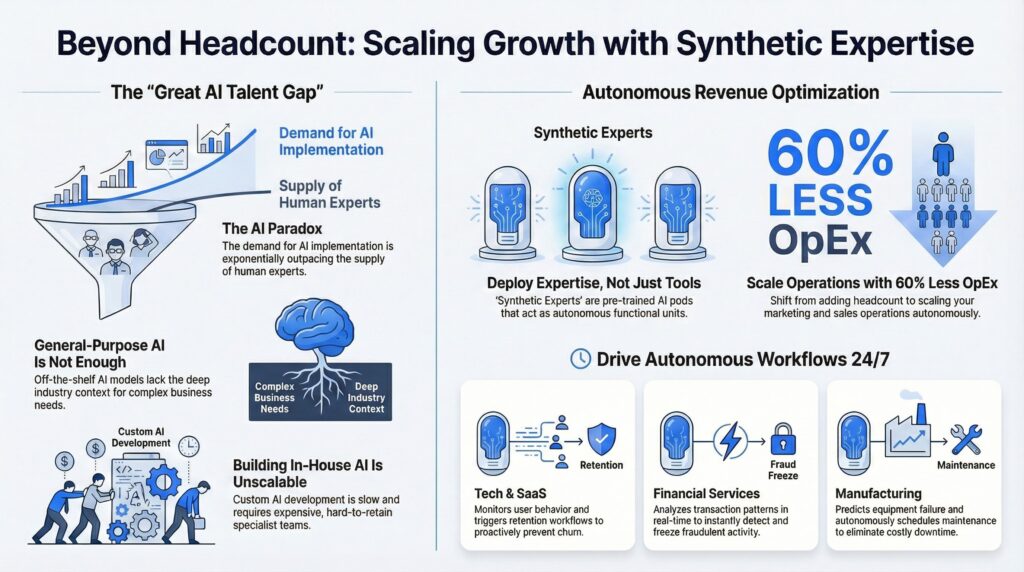
PrescientIQ is unique because it doesn’t just analyze data; it acts on it. It uses a graph not just to store data, but to create a Digital Twin of your business.
- How it fits: It uses the graph to run “Pre-Factual Simulations” (e.g., “What happens if I move $50k from Google to TikTok?”). Once the best path is found, its autonomous agents execute the changes.
2. TigerGraph: The High-Speed Engine
TigerGraph is the “Ferrari engine” that powers other applications. It is not an out-of-the-box solution for marketing or sales; it is the database you would build those solutions on top of.
- How it fits: It excels at Deep Link Analysis (hopping across 10+ connections instantly). It is widely used for fraud detection, supply chain logistics, and training Graph Neural Networks (GNNs).
3. Alembic: The “CFO Whisperer.”
Alembic focuses entirely on the math of Attribution. It rejects the “last-click” model (which assigns all credit to the last ad you saw). It uses advanced mathematics (originally developed for pandemic tracking) to identify the true cause of a sale.
- How it fits: It uses a graph to map the hidden relationships between “invisible” marketing (like a Billboard or Podcast ad) and a spike in web traffic. It proves causality to finance teams.
4. Amigo AI: The “Safe Brain” for Agents
Amigo AI is a toolkit for building agents. If you wanted to build your own version of PrescientIQ for the healthcare industry, you might use Amigo AI to do it.
- How it fits: Its “Context Graph” is designed for safety and grounding. It ensures that an AI agent dealing with patients or sensitive data maintains the conversation’s context and follows strict protocols, preventing hallucinations.
Summary: Which one do you need?
- Buy PrescientIQ if you want an autonomous system to manage and execute your marketing strategy.
- Buy TigerGraph if you have massive, messy data and need a database to find hidden connections (Fraud, 360° Customer View).
- Buy Alembic if you are a CMO who needs to prove to the CFO that your brand marketing is actually driving revenue.
- Buy Amigo AI if you are a developer building custom AI agents for high-risk industries (like Healthcare) and need safety rails.
Conclusion: The Shift from “Big Data” to “Connected Data”
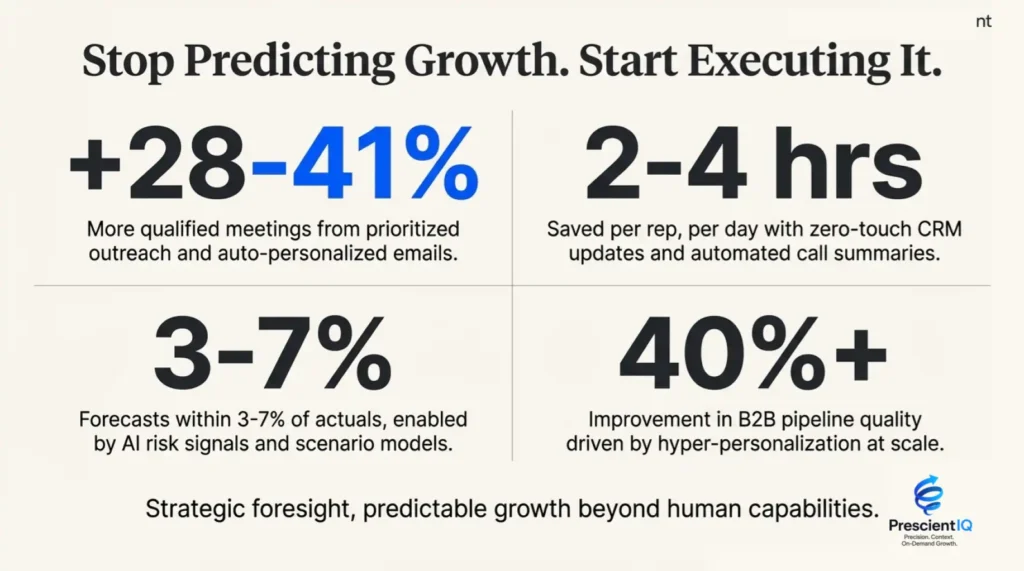
The era of hoarding “Big Data” in static lakes is ending. The new competitive advantage lies in “Connected Data”—the ability to map the messy, dynamic context of the real world into a format that machines can understand.
Context Graphs are not just an IT upgrade; they are the prerequisite for Autonomous Business Operations. By implementing a Context Graph, you move your organization from predicting the future based on the past to simulating and shaping the future based on the present reality.
Next Steps for Leaders:
- Audit your silos: Identify where your “Customer Data” and “Operational Data” are disconnected.
- Start small: Don’t graph the whole enterprise. Build a Context Graph for one specific agent workflow (e.g., “Automated Returns Processing”).
Invest in “Graph Literacy”: Upskill your data team on Graph Query Languages (like Cypher or GQL) and GraphRAG architectures.
FAQ